
- English
- Español
- Português
- русский
- Français
- 日本語
- Deutsch
- tiếng Việt
- Italiano
- Nederlands
- ภาษาไทย
- Polski
- 한국어
- Svenska
- magyar
- Malay
- বাংলা ভাষার
- Dansk
- Suomi
- हिन्दी
- Pilipino
- Türkçe
- Gaeilge
- العربية
- Indonesia
- Norsk
- تمل
- český
- ελληνικά
- український
- Javanese
- فارسی
- தமிழ்
- తెలుగు
- नेपाली
- Burmese
- български
- ລາວ
- Latine
- Қазақша
- Euskal
- Azərbaycan
- Slovenský jazyk
- Македонски
- Lietuvos
- Eesti Keel
- Română
- Slovenski
- मराठी
- Srpski језик

How Can Compact Powder Balance Coverage and Lightweight Wear?
Balancing coverage and lightweight wear is one of the main challenges in compact powder development. A well-designed Compact Powder should even out skin tone, conceal visible imperfections, and create a smooth matte finish without leaving a heavy or cakey appearance. In this article, we explore how powder texture, formula design, application methods, and shade customization influence the final makeup result. At B.C. Biotech, we develop OEM and ODM compact powder solutions with medium to full coverage, SPF40+++ options, and customized shades and packaging for beauty brands.
Table of Contents
- Why Is It Difficult to Balance Coverage and Lightweight Wear?
- How Does Formula Design Affect Compact Powder Performance?
- What Makes a Compact Powder Feel Lightweight Without Losing Coverage?
- How Do Application Methods Change Coverage?
- Compact Powder Specifications and Formula Options
- What Should Brands Consider When Developing Custom Compact Powder?
- How Does B.C. Biotech Support Compact Powder Development?
- Frequently Asked Questions
Why Is It Difficult to Balance Coverage and Lightweight Wear?
In face makeup development, coverage and comfort do not always work in the same direction. A compact powder with strong coverage needs to conceal uneven skin tone, minor blemishes, and visible imperfections. However, if the formula deposits too much powder on the skin, the makeup can look thick, settle into fine lines, or become patchy during application.
On the other hand, a very sheer powder may feel comfortable but cannot provide enough coverage for users who want a more even complexion without applying several layers of foundation.
From our experience in cosmetic manufacturing, the goal is not simply to increase powder coverage. We need to consider how evenly the powder spreads, how it adheres to the skin, and how much product is deposited with each application.
A well-developed Compact Powder should achieve three practical results:
- Effective coverage: Helps even out skin tone and conceal visible imperfections.
- Lightweight application: Provides comfortable wear without an unnecessarily heavy powder layer.
- Natural matte finish: Reduces excessive shine while maintaining a smooth-looking complexion.
How Does Formula Design Affect Compact Powder Performance?
The formula plays a central role in determining whether a pressed powder feels smooth or heavy. Powder composition, particle characteristics, binding systems, and pressing conditions all influence the finished product.
1. Powder Texture and Spreadability
A smooth, silky texture helps the powder distribute more evenly across the skin. When the powder spreads well, users can build coverage gradually instead of repeatedly applying product to the same area.
For a lightweight compact powder, we focus on achieving an even application and a comfortable skin feel. The powder should blend without leaving obvious edges or concentrated patches.
2. Coverage and Layering Performance
Medium to full coverage does not necessarily mean applying a thick layer. A buildable formula allows users to start with a light application and add more product to areas that need additional coverage.
For example, a thin layer may be sufficient for evening out the overall complexion, while a second application around areas with visible redness or uneven tone can provide more coverage.
3. Matte Finish and Skin Appearance
A matte finish is particularly relevant for consumers who prefer a less shiny complexion. However, excessive powder application may make the skin look dry or emphasize texture.
We consider the balance between oil-absorbing performance, powder distribution, and the final visual finish when developing matte compact powder formulas. The intended skin type and target market should also be considered during product development.
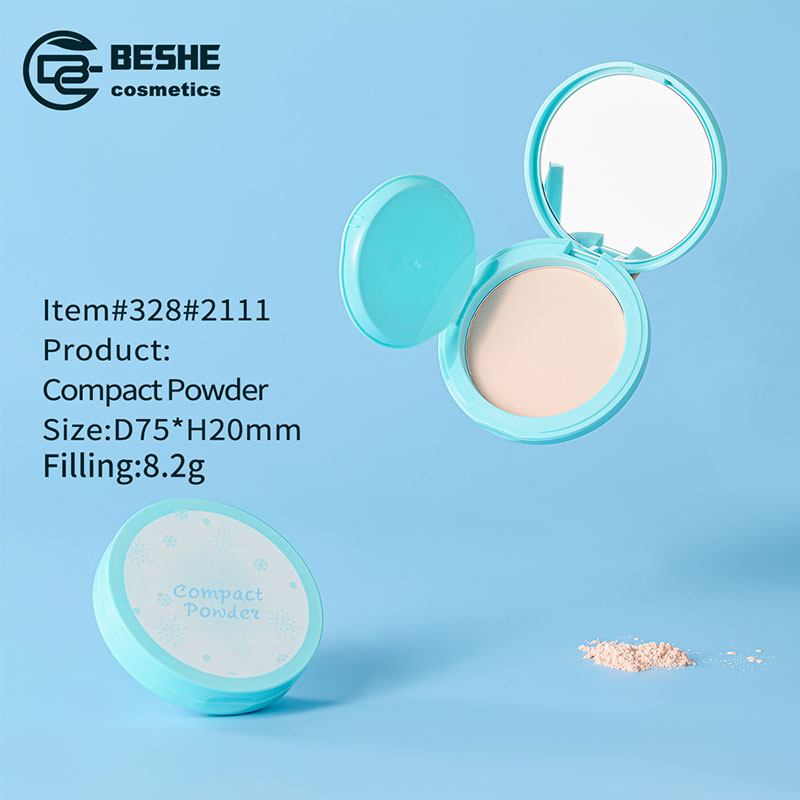
What Makes a Compact Powder Feel Lightweight Without Losing Coverage?
Several product characteristics influence the relationship between coverage and wearing comfort. They should be evaluated together rather than treated as separate selling points.
| Product Factor | Its Role in Formula Performance | What to Evaluate |
|---|---|---|
| Powder Texture | Influences how smoothly the product spreads over the skin. | Silky feel, even distribution, and blending. |
| Coverage Level | Determines how effectively the powder evens out skin tone. | Sheer, medium, full, or buildable coverage. |
| Formula Structure | Affects adhesion, application, and the overall wearing experience. | Whether the powder applies evenly without looking cakey. |
| Finish | Determines the final appearance of the complexion. | Matte appearance, visible powder residue, and skin texture. |
| Shade Selection | Helps the powder match different skin tones and undertones. | Color accuracy and consistency between samples and production. |
One point we pay attention to during development is that a powder may look smooth immediately after application but perform differently after several hours. For this reason, evaluating only the initial finish is not enough. Wear testing should also consider patchiness, settling, and changes in appearance throughout the day.
How Do Application Methods Change Coverage?
Even a well-developed formula can produce different results depending on the application tool and technique. For our Compact Powder, we recommend using either a dry sponge or a makeup brush.
Applying with a Dry Sponge
A dry sponge is suitable when users want more noticeable coverage. Press the sponge lightly into the powder and apply it to the face with gentle pressing motions. Avoid picking up too much product at once, especially around the nose and under-eye areas.
Applying with a Makeup Brush
A brush is a practical option for lighter, more even coverage. Pick up a small amount of powder, remove excess product, and blend it across the skin using gentle circular or sweeping motions.
For everyday makeup, we suggest starting with a thin layer and building coverage only where necessary. This approach helps maintain a more natural-looking matte finish.
Compact Powder Specifications and Formula Options
At B.C. Biotech, our Compact Powder is developed for brands looking for a combination of medium to full coverage, a smooth texture, and a matte finish. The product is also available with customized shades and packaging to accommodate different brand positioning and market requirements.
| Specification | Product Details |
|---|---|
| Product Name | Compact Powder |
| Coverage | Medium to full coverage |
| Finish | Matte finish |
| Texture | Smooth and silky |
| Wearing Performance | Lightweight feel, easy blending, non-cakey application |
| Sun Protection Claim | SPF40+++ |
| Formula References | BMF1747-Q, BMF1411-Q, BMF1403-Q |
| Regulatory Development | Global and Southeast Asian regulatory requirements, clean beauty considerations |
| Application Tools | Dry sponge or makeup brush |
| Customization | Shades, packaging, and product assortments |
Note: SPF performance and regulatory suitability should be confirmed through the relevant testing, documentation, and market-specific compliance review before making product claims or launching a product in a particular market.
What Should Brands Consider When Developing Custom Compact Powder?
For beauty brands planning to launch a private-label compact powder, the development process involves more than choosing a coverage level. The formula, shade range, packaging, and target market need to work together.
1. Define the Target Coverage and Finish
Start by deciding whether the product is intended for everyday natural makeup or more complete complexion coverage. Medium coverage with a matte finish may suit a daily makeup range, while buildable medium-to-full coverage can target consumers who want more visible correction.
2. Develop Shades for the Target Market
Shade selection should account for both skin depth and undertone. A range designed for Southeast Asian markets, for example, may require different shade combinations from one developed for European or North American consumers.
We recommend evaluating physical shade samples under consistent lighting before confirming the final assortment. This helps reduce color differences between development samples and the approved product.
3. Select Suitable Packaging
Compact powder packaging needs to protect the pressed powder during transportation and everyday use. Brands can consider different compact case designs, mirror configurations, applicator options, and outer packaging according to their product positioning.
4. Review Regulatory Requirements Early
For products intended for international distribution, regulatory requirements should be considered during formula development rather than after production. This is especially important for products carrying SPF claims or targeting markets with specific ingredient and labeling requirements.
At B.C. Biotech, we offer formula development directions that consider global and Southeast Asian regulatory requirements and clean beauty preferences. The final formula and claims still need to be reviewed against the regulations of each destination market.
How Does B.C. Biotech Support Compact Powder Development?
Guangdong B.C. Biotech Co., Ltd. was founded in 2017 in Zhongshan, Guangdong, China. We initially focused on OEM services for domestic cosmetic brands and gradually expanded into a specialized cosmetics OEM and ODM manufacturer serving both domestic and overseas customers.
Our product range covers eyeshadow, blush, contour, face powder, lipstick, and other color cosmetics. This experience allows us to work with brands on different makeup categories and coordinate product development according to their market positioning.
For Compact Powder projects, we focus on several practical development areas:
- Formula development: Different coverage levels, matte finishes, and texture requirements can be discussed according to the product concept.
- Shade customization: Brands can develop shades and assortments for their target customer groups.
- Packaging customization: Compact cases and outer packaging can be selected and customized to match brand identity.
- OEM and ODM cooperation: We support both manufacturing based on an existing product concept and customized product development.
Our approach is to evaluate the finished product as a whole. Coverage, blending, powder texture, shade accuracy, and packaging should all meet the intended product requirements before a formula is finalized.
To learn more about our manufacturing capabilities, visit our B.C. Biotech company profile. You can also explore our pressed powder product range for additional product development options.
Frequently Asked Questions
1. Can Compact Powder Replace Liquid Foundation?
It depends on the formula and the coverage users expect. A medium-to-full coverage compact powder can provide complexion correction on its own for some daily makeup routines. However, consumers who need stronger coverage for pronounced discoloration or blemishes may prefer using concealer or foundation underneath.
2. Why Does Compact Powder Sometimes Look Cakey After Application?
Common reasons include applying too much product, using an unsuitable application technique, or layering powder over an uneven or insufficiently prepared base. We recommend starting with a small amount and building coverage gradually. Applying additional powder to already heavily powdered areas can make the finish look less natural.
3. Is Matte Compact Powder Suitable for Dry Skin?
It can be used on dry skin, but the final result depends on the formula and skin preparation. A highly matte finish may emphasize dry patches if the skin is not properly moisturized. For brands developing products for dry-skin users, we recommend evaluating the powder's comfort, blending, and appearance on dry skin during sample testing.
4. What Is the Difference Between Medium and Full Coverage Compact Powder?
Medium coverage helps even out skin tone and reduce the appearance of minor imperfections while maintaining a relatively natural look. Full coverage is designed to provide more noticeable complexion correction. Buildable formulas allow users to adjust the coverage through additional application.
5. Can SPF40+++ Be Included in a Custom Compact Powder Formula?
Yes, an SPF40+++ option is available in B.C. Biotech's compact powder product offering. However, the final SPF value and related sun protection claims must be supported by appropriate testing and documentation. Brands should also review the applicable sunscreen and cosmetic regulations in their intended sales markets.
6. Can B.C. Biotech Customize Compact Powder Shades and Packaging?
Yes. We support customized shades, packaging, and product assortments for OEM and ODM projects. Before confirming a production plan, we recommend discussing the target market, desired coverage, finish, shade range, packaging design, and applicable regulatory requirements.
7. What Information Should Brands Prepare Before Starting an OEM Compact Powder Project?
It is helpful to prepare a product brief covering the target market, preferred coverage, finish, reference shades, packaging concept, estimated order quantity, and any regulatory requirements. If you have an existing sample or product reference, sharing it can also help clarify the expected texture and makeup effect.
Develop Your Compact Powder with B.C. Biotech
Balancing coverage and lightweight wear requires careful consideration of powder texture, formula performance, application, and target skin preferences. A successful compact powder should not simply provide high coverage; it should also spread evenly and maintain a comfortable, smooth-looking finish.
At B.C. Biotech, we provide OEM and ODM cosmetic manufacturing services for brands developing customized face makeup products. Whether you are planning a medium-coverage daily powder or a matte compact powder with SPF40+++ options, we can discuss the formula direction, shade development, and packaging requirements for your project.
Visit our Compact and Pressed Powder product range or contact B.C. Biotech to discuss your OEM/ODM development requirements.


