
- English
- Español
- Português
- русский
- Français
- 日本語
- Deutsch
- tiếng Việt
- Italiano
- Nederlands
- ภาษาไทย
- Polski
- 한국어
- Svenska
- magyar
- Malay
- বাংলা ভাষার
- Dansk
- Suomi
- हिन्दी
- Pilipino
- Türkçe
- Gaeilge
- العربية
- Indonesia
- Norsk
- تمل
- český
- ελληνικά
- український
- Javanese
- فارسی
- தமிழ்
- తెలుగు
- नेपाली
- Burmese
- български
- ລາວ
- Latine
- Қазақша
- Euskal
- Azərbaycan
- Slovenský jazyk
- Македонски
- Lietuvos
- Eesti Keel
- Română
- Slovenski
- मराठी
- Srpski језик

How Can Chrome Liquid Eyeshadow Create a Stunning Metallic Eye Look?
Article Overview
Chrome Liquid Eyeshadow has become an exciting choice for beauty lovers who want luminous, reflective, and multidimensional eye makeup without spending too much time blending multiple powder products. Its liquid texture and metallic finish make it suitable for everyday makeup, evening occasions, professional beauty looks, and creative eye designs.
However, achieving a smooth chrome effect requires more than simply applying a shiny product. Texture, pigment distribution, eyelid preparation, application techniques, and formula performance all influence the final result. This guide explains how Chrome Liquid Eyeshadow works, how to apply it correctly, how to avoid common makeup problems, and what to consider when choosing a reliable product for personal use or beauty business sourcing.
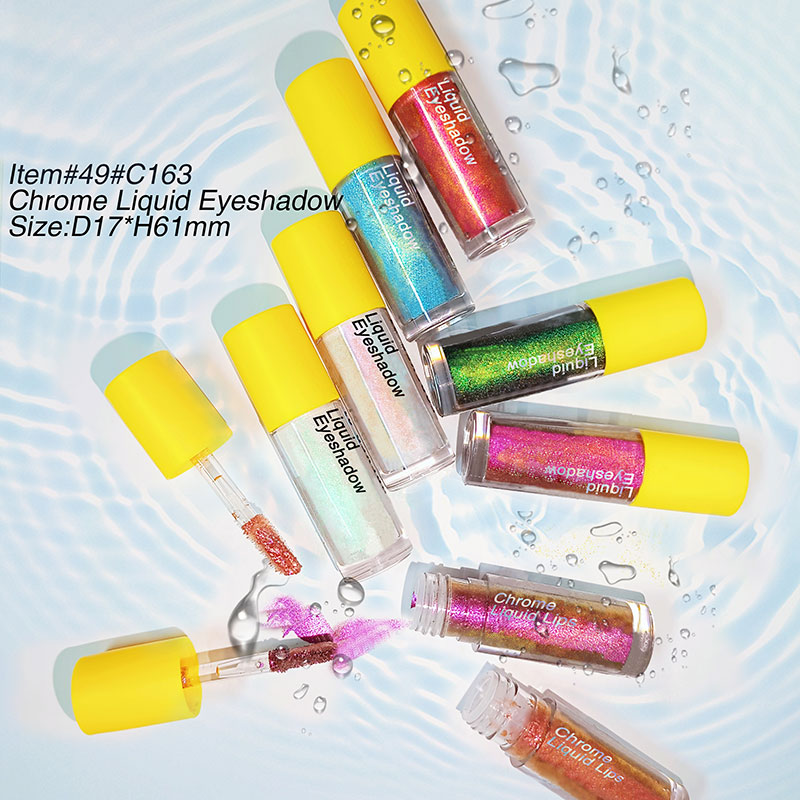
Table of Contents
- What Is Chrome Liquid Eyeshadow?
- How Does Chrome Liquid Eyeshadow Work?
- What Makes a High-Quality Formula?
- How to Apply Chrome Liquid Eyeshadow Step by Step
- How to Create Different Eye Makeup Looks
- How to Prevent Common Application Problems
- How to Choose the Right Chrome Eyeshadow Shade
- Chrome Liquid Eyeshadow vs. Powder Eyeshadow
- What Should Beauty Brands Consider When Sourcing?
- How to Store and Maintain Liquid Eyeshadow
- Frequently Asked Questions
1. What Is Chrome Liquid Eyeshadow?
Chrome Liquid Eyeshadow is a liquid-based eye makeup product designed to deliver a reflective, metallic, or color-shifting finish. Unlike traditional matte eyeshadows, which mainly provide flat or soft color, chrome formulas use reflective pigments to create a luminous appearance that changes with lighting and viewing angles.
Depending on the formulation and pigment selection, the finish may look like polished silver, liquid gold, rose gold, bronze, or a multidimensional combination of several colors.
Key Characteristics of Chrome Liquid Eyeshadow
- Metallic reflection: Creates a noticeable shine that gives the eyelids a brighter and more dimensional appearance.
- Liquid texture: Usually comes in a tube or compact container with an applicator for controlled application.
- Buildable color: Some formulas allow users to create anything from a subtle luminous wash to a more intense metallic finish.
- Versatile makeup effects: Can be used across the eyelid, as an accent color, or for selected details depending on the product instructions.
- Multiple shade possibilities: Available in neutral metallic colors, bold chrome shades, and iridescent color-shifting combinations.
For consumers, the biggest attraction is convenience. A single product can provide a polished eye-catching finish without requiring several separate shimmer powders or complicated layering techniques.
Practical insight: A beautiful chrome effect depends on both pigment reflectivity and formula consistency. Strong shine alone does not guarantee a smooth, comfortable, or easy-to-use product.
2. How Does Chrome Liquid Eyeshadow Work?
The visual effect of Chrome Liquid Eyeshadow comes from the interaction between reflective pigments, the liquid base, and light. When the product is spread across the eyelid, its pigments create a reflective surface that gives the makeup its metallic appearance.
2.1 Reflective Pigments Create the Chrome Effect
Different pearlescent and effect pigments can produce different visual results. Mica-based pigments, synthetic fluorphlogopite, and other suitable effect pigments may be used depending on the desired color, brightness, and formulation requirements.
Some pigment combinations produce a traditional metallic finish, while others create a duochrome or multichrome appearance. These effects can shift between colors as the angle of light changes.
2.2 The Liquid Base Supports Application
The liquid base helps distribute pigments across the eyelid. Depending on the formula, it may contain water, emollients, film-forming ingredients, thickeners, and other components that influence spreadability, drying behavior, and the finished texture.
2.3 Film Formation Influences Wear Performance
Some liquid eyeshadow formulations use film-forming ingredients to help the product create a more consistent layer after application. The final performance depends on the complete formula, including pigment loading, ingredient compatibility, drying time, and application thickness.
A well-balanced formula should provide a reasonable working time for spreading while allowing the product to settle into an even finish.
3. What Makes a High-Quality Chrome Liquid Eyeshadow Formula?
Not all metallic liquid eyeshadows perform in the same way. A product may look impressive in its packaging but become difficult to apply, uneven, or uncomfortable after it dries. Understanding the characteristics of a well-designed formula helps consumers and beauty brands make more informed decisions.
3.1 Smooth and Even Texture
A smooth texture helps the product spread across the eyelid without excessive dragging. Pigments should be distributed consistently rather than collecting in isolated areas. This is especially important for chrome finishes because uneven pigment placement can make the reflective surface look patchy.
3.2 Balanced Drying Time
If a product dries too quickly, users may struggle to blend it before it sets. If it remains wet for too long, the makeup may move or transfer before it becomes stable. The ideal drying behavior depends on the intended application style and overall formula design.
3.3 Consistent Pigment Performance
Color payoff should be reasonably consistent between applications. Users generally want the shade displayed in product images and packaging to resemble the actual result on the eyelid. Pigment dispersion and formulation stability are important factors in achieving this consistency.
3.4 Comfortable Wear
Eye makeup is applied to a delicate area, so comfort should be considered alongside appearance. The formula should be developed with suitable cosmetic ingredients and tested according to applicable safety requirements. A product intended for the eye area should only use pigments and ingredients permitted for that application in its target markets.
3.5 Suitable Applicator Design
The applicator affects how easily users can control the amount of product. A well-designed doe-foot applicator can help distribute color across the eyelid, while a smaller precision tip may be useful for detailed makeup effects.
| Quality Factor | What Users Need | Why It Matters |
|---|---|---|
| Texture | Smooth and spreadable | Helps create an even metallic surface. |
| Pigment | Consistent color and reflection | Improves visual impact and color payoff. |
| Drying time | Suitable working and setting time | Makes application easier to control. |
| Wear performance | Stable finish under intended use | Helps maintain the makeup appearance. |
| Applicator | Easy and precise product distribution | Reduces unnecessary product waste. |
| Safety | Suitable ingredients and testing | Supports responsible use around the eyes. |
4. How to Apply Chrome Liquid Eyeshadow Step by Step
Even a high-quality formula can produce an uneven finish when applied incorrectly. Following a few simple steps can help create a more professional-looking metallic eye makeup result.
Step 1: Prepare the Eyelids
Start with clean, dry eyelids. Remove excess oil and skincare residue before applying eye makeup. If your eyelids become oily during the day, a suitable eyeshadow primer can help create a more consistent base.
Avoid applying too much moisturizer immediately before makeup because excess surface moisture may interfere with the way certain formulas spread and set.
Step 2: Apply a Small Amount
Take a small amount of Chrome Liquid Eyeshadow using the applicator. Apply it to the center of the eyelid or the area where you want the strongest metallic reflection.
Starting with a small amount makes it easier to control the coverage and prevents unnecessary product buildup.
Step 3: Blend Before the Formula Sets
Use a clean fingertip or a suitable synthetic brush to gently spread the product. Work from the center toward the outer and inner portions of the eyelid, depending on your desired look.
For a soft metallic appearance, blend the edges carefully. For a more dramatic result, keep the strongest pigment concentration near the center of the eyelid.
Step 4: Allow the First Layer to Set
Follow the product's recommended drying time. Avoid repeatedly touching or rubbing the area while the formula is setting. This helps reduce the risk of disturbing the reflective finish.
Step 5: Build Additional Coverage if Needed
If a more intense chrome appearance is desired, apply a second thin layer after the first layer has settled. Gradually build the color instead of applying a thick amount at once.
Step 6: Complete the Makeup Look
Finish with eyeliner, mascara, or other eye makeup products that complement the selected shade. Keep the rest of the makeup balanced so that the metallic eye effect remains the main visual feature.
Application tip: Thin, controlled layers generally offer better application control than one heavy application. Always follow the specific product instructions because drying time and layering behavior vary between formulas.
5. How to Create Different Eye Makeup Looks
One of the advantages of Chrome Liquid Eyeshadow is its versatility. The same product can create different visual effects depending on the amount applied, the placement, and the surrounding makeup.
5.1 Everyday Soft Metallic Look
For daily makeup, choose champagne, soft bronze, pale gold, or rose gold. Apply a thin layer across the center of the eyelid and blend the edges gently. Pair the look with natural eyeliner and mascara for a polished appearance without excessive shine.
5.2 Glamorous Evening Look
For evening events, deeper metallic shades such as bronze, copper, silver, or rich gold can create stronger visual impact. Apply the product more intensely across the mobile eyelid and combine it with complementary matte eyeshadow in the crease.
5.3 Multichrome Statement Look
Multichrome shades are suitable for creative makeup designs. These colors can appear different under various lighting conditions, making them particularly attractive for photography, performances, and special occasions.
Keep the surrounding colors relatively simple if you want the shifting metallic finish to stand out.
5.4 Inner-Corner Highlight
A small amount of light-reflective liquid eyeshadow can brighten the inner corner of the eyes when the specific product is suitable for that placement. Use a clean precision brush and avoid getting the product into the eyes.
5.5 Defined Metallic Eyeliner Effect
Some liquid eyeshadow formulas can be applied with a fine synthetic brush to create a decorative metallic line. However, only use a product in this way if its intended use and labeling permit it. Keep the application away from the waterline and follow eye-area safety instructions.
6. How to Prevent Common Application Problems
Users sometimes experience creasing, uneven color, flaking, or excessive shine buildup when working with liquid metallic eyeshadow. Many of these issues can be reduced through proper preparation and controlled application.
Problem 1: The Product Looks Patchy
Possible causes: Applying too much product, uneven pigment distribution, excessive rubbing, or an unsuitable base.
Practical solutions:
- Start with a clean and dry eyelid.
- Use a small amount of product.
- Spread the formula evenly before it sets.
- Build coverage with thin layers rather than one thick layer.
Problem 2: The Eyeshadow Creases
Possible causes: Excess product, oily eyelids, incomplete setting, or incompatibility between layered products.
Practical solutions:
- Use an appropriate eyeshadow primer if needed.
- Avoid applying an excessively thick layer.
- Allow each layer to settle before adding another.
- Test product combinations before wearing them for extended periods.
Problem 3: The Finish Becomes Flaky
Possible causes: Formula incompatibility, excessive layering, or a product that has deteriorated during storage.
Practical solutions:
- Follow the recommended application amount.
- Avoid mixing products unless the manufacturer confirms compatibility.
- Check the product's shelf life and condition.
- Stop using the product if its texture, smell, or appearance changes unexpectedly.
Problem 4: The Metallic Finish Looks Too Heavy
Possible causes: Applying a large amount of highly reflective pigment over the entire eyelid.
Practical solutions:
- Use a smaller amount for a softer finish.
- Blend the outer edges with a clean brush.
- Concentrate the shine on the center of the eyelid.
- Balance the look with neutral matte shades.
Problem 5: The Product Transfers Before Setting
Possible causes: Touching the eyelid too soon, applying an excessive amount, or using a formula that needs additional setting time.
Practical solutions:
- Allow the product to dry according to its instructions.
- Avoid pressing the upper and lower eyelids together unnecessarily.
- Apply thinner layers for more controlled coverage.
7. How to Choose the Right Chrome Eyeshadow Shade
Shade selection influences the overall appearance of eye makeup. The right color should complement personal preferences, the occasion, and the desired intensity.
| Shade | Visual Effect | Suitable Makeup Style |
|---|---|---|
| Champagne | Soft and luminous | Natural and everyday makeup |
| Rose Gold | Warm and elegant | Romantic and occasion makeup |
| Silver Chrome | Cool and futuristic | Editorial and party makeup |
| Bronze | Rich and dimensional | Evening and glamorous looks |
| Liquid Gold | Bright and luxurious | Festive and statement makeup |
| Multichrome | Color-shifting and expressive | Creative and artistic makeup |
Consider Skin Tone and Personal Style
Warm metallic shades such as copper, bronze, and gold are popular choices for warm-toned makeup looks. Champagne, silver, and cool pink shades can complement cooler color palettes. Neutral shades are versatile and can work across many makeup styles.
However, there are no strict rules. Personal preference, lighting, outfit colors, and the desired makeup effect should all influence the final selection.
Consider the Occasion
Subtle metallic finishes are often suitable for office makeup and everyday wear, while reflective multichrome effects may be more appropriate for parties, events, and creative makeup applications.
8. Chrome Liquid Eyeshadow vs. Powder Eyeshadow
Both liquid and powder eyeshadows have advantages. The best option depends on the user's makeup habits, desired finish, and application preferences.
| Comparison | Chrome Liquid Eyeshadow | Traditional Powder Eyeshadow |
|---|---|---|
| Texture | Liquid or gel-like | Pressed or loose powder |
| Finish | Often metallic and reflective | Matte, shimmer, satin, or metallic |
| Application | Applicator, finger, or suitable brush | Usually applied with makeup brushes |
| Layering | Depends on drying behavior and formula | Usually easy to blend and layer |
| Travel convenience | Compact packaging options are available | Depends on palette and packaging |
| Learning curve | Requires control of application and setting time | Offers familiar blending techniques |
Chrome Liquid Eyeshadow is a convenient option for users who prioritize a reflective metallic finish and straightforward application. Powder eyeshadow remains useful for creating soft transitions, detailed blending, and complex multi-color designs.
Many makeup artists combine both formats to achieve a balanced result. For example, matte powder can define the crease while liquid chrome eyeshadow adds concentrated shine to the center of the eyelid.
9. What Should Beauty Brands Consider When Sourcing Chrome Liquid Eyeshadow?
For cosmetic brands, distributors, wholesalers, and private-label businesses, selecting a suitable Chrome Liquid Eyeshadow supplier involves more than comparing product prices. Formula performance, production consistency, packaging, regulatory documentation, and customization capabilities can all influence the success of a product line.
9.1 Formula Quality and Product Performance
Request product samples before placing a large order. Evaluate texture, pigmentation, spreadability, drying behavior, finish, and wear performance under realistic conditions.
It is also useful to compare different shades because pigment combinations may influence the texture and visual appearance of each formulation.
9.2 Ingredient and Compliance Documentation
Eye-area cosmetics require particular attention to ingredient suitability and regulatory compliance. Buyers should request relevant ingredient information, safety documentation, and applicable testing records for their intended sales markets.
Depending on the destination market, requirements may include cosmetic ingredient compliance, product safety assessment, labeling, manufacturing quality controls, and other supporting documents.
9.3 Packaging and Applicator Customization
Packaging affects both product presentation and daily usability. Consider the following details:
- Container capacity and overall dimensions.
- Applicator shape and ease of product distribution.
- Packaging material and compatibility with the formula.
- Closure performance and leakage resistance.
- Brand logo, printing, and customized color design.
9.4 Shade Development and Product Differentiation
Beauty brands may want to develop a recognizable color collection instead of offering only standard metallic shades. Custom shade development can help create a stronger product identity.
Before finalizing a shade, evaluate its actual appearance under different lighting conditions and on different skin tones. Physical samples are more useful than digital color previews alone.
9.5 Production Capacity and Quality Consistency
For long-term cooperation, buyers should understand the supplier's production capabilities, quality-control procedures, lead times, minimum order quantities, and sample policies.
Ask how raw materials, pigment dispersion, filling, packaging, and finished products are inspected. Consistent manufacturing standards help reduce differences between production batches.
9.6 Questions to Ask a Potential Supplier
- Can you provide samples for evaluation?
- What shades and finishes are currently available?
- Do you support private-label or OEM/ODM customization?
- Can the formula or packaging be customized?
- What is the minimum order quantity?
- What product testing and compliance documents can you provide?
- What are the estimated sampling and production lead times?
For B2B buyers: A reliable supplier should be able to explain its product specifications, customization process, quality-control approach, and documentation clearly. Always evaluate actual samples and verify claims before making purchasing decisions.
10. How to Store and Maintain Liquid Eyeshadow
Proper storage helps maintain the condition of liquid eye makeup. Since liquid formulations may contain water, volatile ingredients, pigments, and other components, their performance can be affected by unsuitable storage conditions or contamination.
Keep the Container Tightly Closed
Always close the cap after use. A loose cap may allow moisture loss or exposure to air, potentially changing the product's consistency and application behavior.
Avoid Excessive Heat and Direct Sunlight
Store the product according to the manufacturer's instructions. Avoid leaving it in hot vehicles, near heating equipment, or in places exposed to prolonged direct sunlight.
Keep the Applicator Clean
Avoid sharing eye makeup applicators without appropriate hygiene practices. Do not return contaminated tools to the container, and avoid using the product if contamination is suspected.
Check the Product Before Use
Observe changes in smell, texture, color, or consistency. Follow the stated expiration date and period-after-opening instructions. Discontinue use if irritation occurs or if the product appears damaged or contaminated.
For consumers with sensitive eyes or a history of cosmetic reactions, checking the ingredient list and seeking professional advice when appropriate can help reduce unnecessary risks.
11. Frequently Asked Questions
Q1: What is Chrome Liquid Eyeshadow used for?
Chrome Liquid Eyeshadow is used to create metallic, reflective, and sometimes color-shifting eye makeup effects. It can be applied across the eyelid or used as an accent, depending on the product's intended use.
Q2: Is Chrome Liquid Eyeshadow suitable for beginners?
Yes. Many liquid eyeshadows come with built-in applicators that make product placement convenient. Beginners should start with a small amount, blend before the formula sets, and build coverage gradually.
Q3: How can I make Chrome Liquid Eyeshadow last longer?
Start with clean, dry eyelids and consider a compatible eyeshadow primer. Apply thin layers, allow the formula to set according to its instructions, and avoid unnecessary touching during application.
Q4: Can I apply Chrome Liquid Eyeshadow over powder eyeshadow?
Some formulas can be layered over powder eyeshadow, but compatibility varies. Test the combination first and use a small amount to avoid disturbing the underlying makeup.
Q5: Why does my liquid chrome eyeshadow look uneven?
Uneven application may result from excess product, an oily eyelid surface, insufficient blending, or pigment distribution issues. Preparing the eyelid and applying thin layers can help improve the finish.
Q6: Can Chrome Liquid Eyeshadow be used as eyeliner?
Only when the specific product is labeled or otherwise confirmed as suitable for that application. Use an appropriate brush and avoid the waterline or direct contact with the eyes.
Q7: What is the difference between chrome and multichrome eyeshadow?
Chrome generally describes a highly reflective metallic appearance, while multichrome refers to an effect that shifts between multiple colors depending on lighting and viewing angle. Some products combine both effects.
Q8: How should I choose a Chrome Liquid Eyeshadow supplier?
Compare sample quality, formula performance, shade options, packaging, customization services, production capacity, quality controls, and relevant compliance documentation. Do not rely on product images or price alone.
Q9: Can beauty brands customize Chrome Liquid Eyeshadow?
Customization options depend on the supplier. Some manufacturers may offer private-label packaging, customized shades, formula development, and OEM/ODM services. Confirm the available services, minimum order quantities, and development timelines directly.
Q10: How should Chrome Liquid Eyeshadow be stored?
Keep the container tightly closed and follow the manufacturer's storage instructions. Avoid excessive heat, direct sunlight, and contamination. Check the product condition before every use.
Looking for a Reliable Chrome Liquid Eyeshadow Partner?
Creating a successful beauty product starts with the right formulation, attractive packaging, consistent quality, and a supplier who understands your business requirements.
GuangDong B.C.Biotech Co.,Ltd. welcomes inquiries from beauty brands, cosmetic distributors, wholesalers, and businesses interested in exploring cosmetic product cooperation.
Whether you are developing a new makeup collection, exploring private-label opportunities, or sourcing products for your beauty business, our team is ready to discuss your requirements.
Contact us today to discuss your Chrome Liquid Eyeshadow project, request product information, and explore potential cooperation opportunities.


